
P0106: Manifold Absolute Pressure/Barometric Pressure Circuit Range/Performance Problem
When you purchase through links on our site, we may earn an affiliate commission. See our affiliate disclaimer for more information.
What does the P0106 Manifold Absolute Pressure/Barometric Pressure Range/Performance Problem mean?
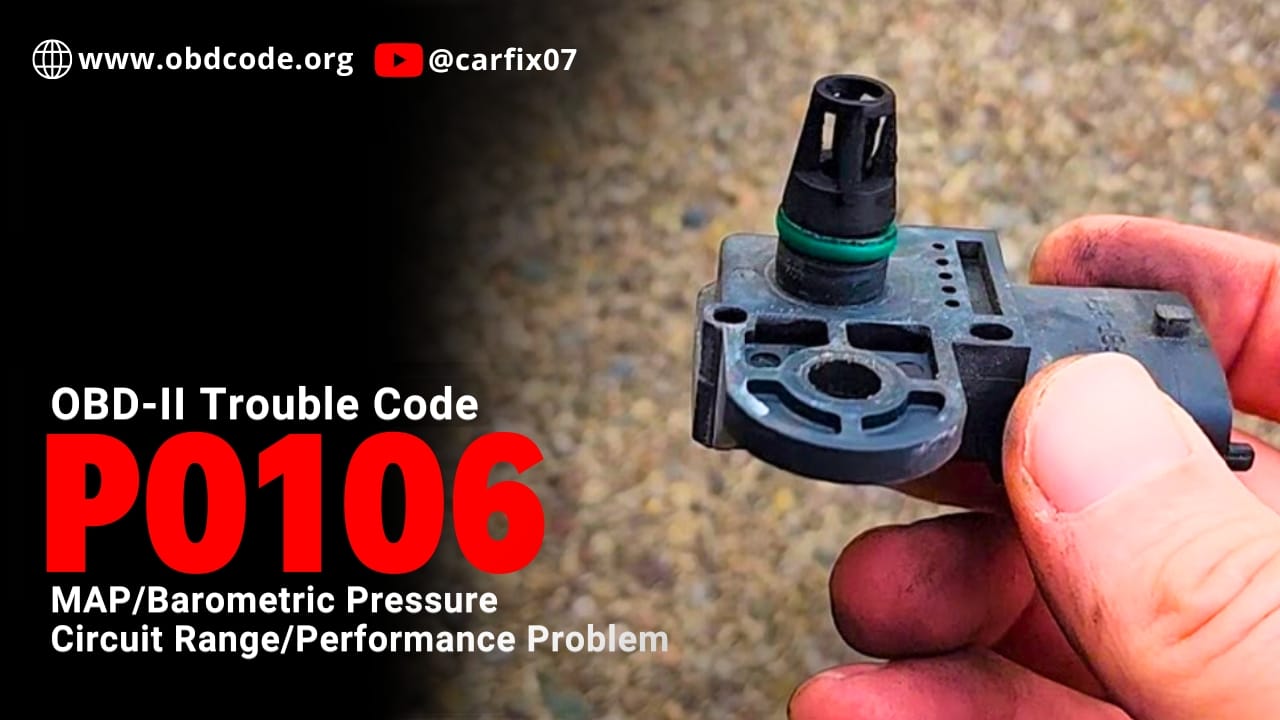
DTC P0106 is a generic OBD‑II code indicating a MAP/BARO sensor range or performance issue. In other words, the engine control unit (ECM/PCM) has detected that the manifold absolute pressure (MAP) or barometric pressure (BARO) sensor reading is not within the expected range for current engine conditions.
The MAP sensor monitors the intake manifold’s absolute pressure (engine vacuum). Under load (throttle open, higher RPM) manifold pressure rises; at idle, manifold vacuum is high and pressure low. The ECU uses this MAP data to gauge engine load and adjust air-fuel ratio, ignition timing and EGR operation.
A separate BARO sensor measures ambient atmospheric pressure. In practice, many modern vehicles integrate MAP and BARO in one unit or use the MAP sensor’s key-on reading as the barometric reference. The only difference is location – the MAP sensor is plumbed to the manifold, while a BARO is vented to outside air.
The ECM monitors the MAP/BARO signal as part of its engine load calculation. In speed-density fuel injection systems, the ECM combines the MAP voltage with inputs like engine speed (RPM) and throttle position (TPS) to estimate airflow and set fuel and ignition.
If the MAP signal is implausible or inconsistent (e.g. stuck at an extreme or not changing when it should), the ECM cannot correctly compute the air-fuel mixture and will set P0106. In summary, P0106 means the ECM sees the MAP/BARO sensor output “out of range” or “out of sync” with expected values for the current engine conditions.
Read our free complete guide on Kindle and learn how to diagnose sensor-related issues with clarity and confidence.
STOP GUESSING. START DIAGNOSING. SAVE HUNDREDS ON REPAIRS.
Tired of expensive repair bills and mechanics who “parts-cannon” your car without finding the real issue? The “Check Engine” light shouldn’t be a mystery. This guide puts professional-level diagnostics in your hands.
When the P0106 Triggers?
The Engine Control Module (ECM) continuously monitors the Manifold Absolute Pressure (MAP) sensor signal to determine engine load and calculate the correct fuel injection and ignition timing. To ensure the MAP sensor is operating correctly, the ECM performs several plausibility checks by comparing the MAP signal against engine operating conditions such as throttle position, engine speed, and barometric pressure.
The MAP sensor typically receives a 5-volt reference signal and ground from the ECM and returns a voltage signal that changes according to intake manifold pressure.
Typical MAP Sensor Voltage Readings
| Engine Condition | Manifold Pressure | Typical MAP Voltage |
|---|---|---|
| Key On, Engine Off (KOEO) at Sea Level | ~101 kPa | ~4.0–4.8 V |
| Idle | ~20–40 kPa | ~0.8–1.5 V |
| Light Cruise | ~40–60 kPa | ~1.5–3.0 V |
| Moderate Acceleration | ~60–80 kPa | ~3.0–4.0 V |
| Wide Open Throttle (WOT) | ~95–100 kPa | ~4.5–5.0 V |
Note: Actual values vary depending on vehicle manufacturer, altitude, engine design, and sensor calibration.
The ECM may store code P0106 when one or more of the following conditions are detected:
MAP Signal Outside the Expected Range: Most MAP sensors operate within an approximate range of 0.5 to 4.5 volts. If the signal remains excessively low or excessively high for a prolonged period, the ECM interprets this as an electrical fault or sensor malfunction.
MAP vs Baro Mismatch: With the engine off (KOEO), the MAP sensor should read approximately the same as a barometric (BARO) sensor or known barometric pressure (≈101 kPa). If on key‑on the MAP reading does not match actual atmospheric pressure (say the MAP reads 3.5 V instead of ~4.2 V at sea level), the ECM may conclude the MAP circuit is faulty.
Throttle Position vs MAP Mismatch: The ECM compares MAP readings to throttle position (TPS) and RPM. For instance, when the throttle is opened, manifold vacuum should fall and MAP voltage should rise. If the throttle is wide open but the MAP reading remains inexplicably low (or does not rise within a short time), the signal is implausible and P0106 can be set.
Unexpected MAP Response: The freeze-frame data captured when the code sets can provide clues. A normal idle MAP voltage might be ~0.8–1.2 V (reflecting ~40–60 kPa manifold pressure). A reading of 3.0 V at idle would be abnormally high, and 1.0 V at full throttle would be abnormally low. The ECM looks for a “normal” curve (as shown below). Any flat or erratic reading during load changes (e.g. MAP signal “stuck” while throttle opens) will trigger the code.
In summary, P0106 triggers when the MAP/BARO sensor output is out of its calibrated range or is not behaving as it should given engine load, throttle and RPM.
Read more about:
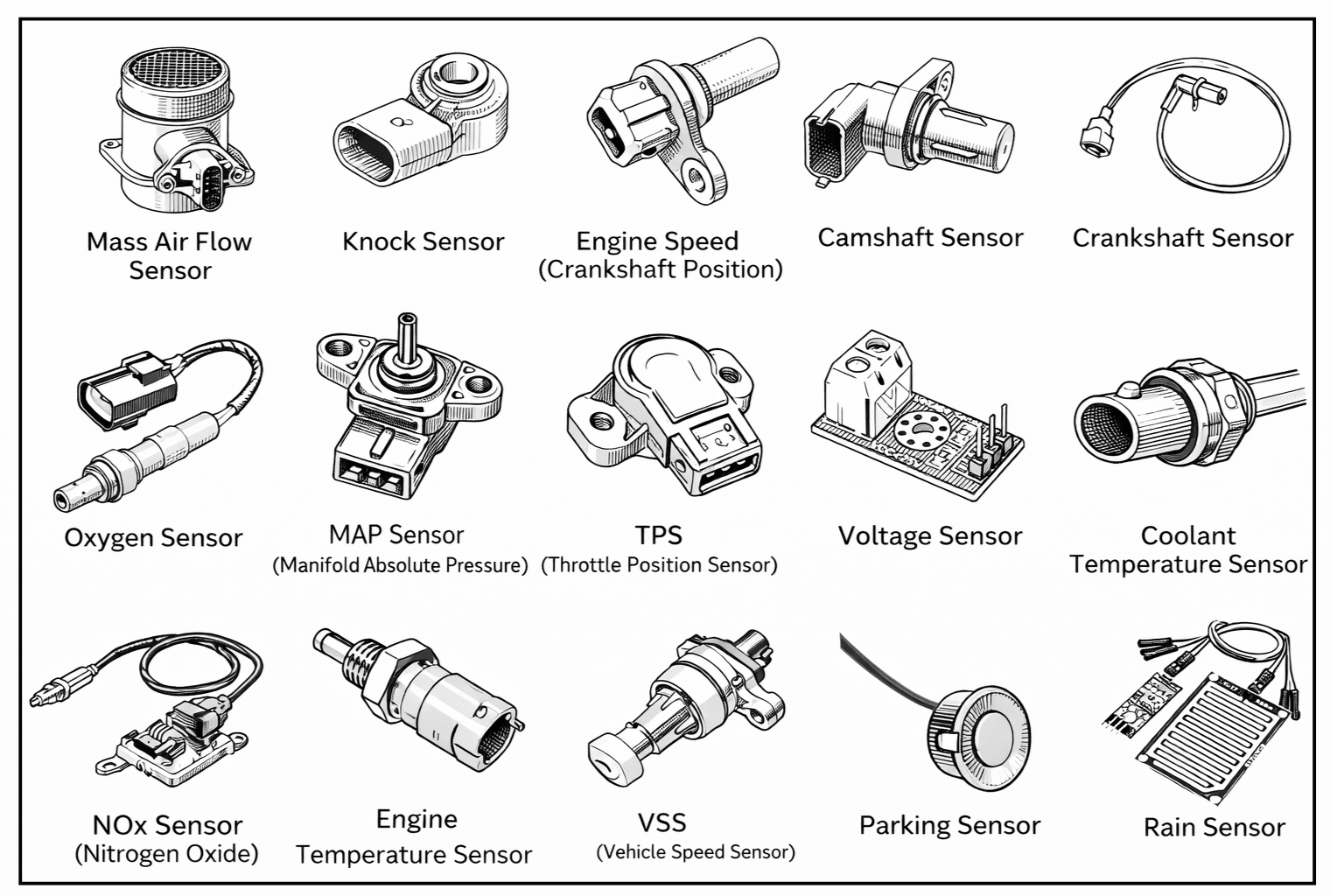
Car Sensors Explained: What They Do and How to Diagnose Them
With the increasing use of electronic systems in modern vehicles,…
How to Prevent OBD Trouble Codes and Avoid the Check Engine Light
Regular vehicle maintenance is the best way to prevent OBD trouble codes and keep the check engine light from appearing. Follow your vehicle’s recommended service schedule, change engine oil and filters on time, use the correct fuel and fluids, and fix small problems before they turn into expensive repairs.
Never miss your vehicle service again. Download Carvio and easily track fuel usage, maintenance history, and service reminders to help keep your vehicle running smoothly.


How To Fix P0106?
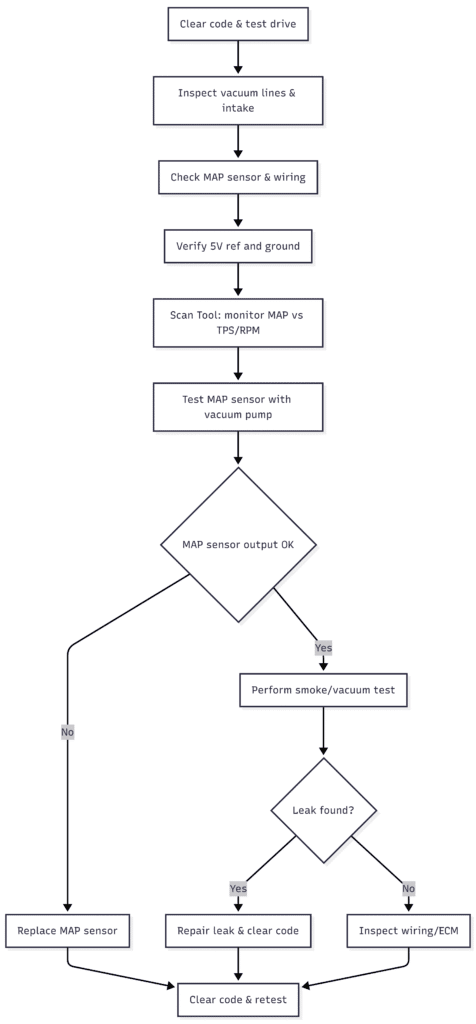
Diagnosing P0106 follows a systematic approach:
- Clear the code and test drive. Start by using an OBD-II scanner to clear the code and then drive the vehicle to see if P0106 returns. Sometimes codes are temporary. If it returns immediately, proceed. If intermittent, capture freeze-frame data or scan-tool data when it reappears to analyze conditions (e.g. RPM, throttle, MAP voltage at that moment).
- Visual inspection. With the engine OFF, inspect the MAP sensor and surroundings:
- Look for vacuum hoses: On many engines the MAP sensor connects via a small vacuum hose. Check that this hose isn’t cracked, collapsed, or disconnected. A crushed hose or leak here mimics MAP failure.
- Inspect the MAP sensor housing if it’s direct-mounted (common on turbo engines): ensure it’s seated and sealed, not cracked.
- Check for oil or debris in the hose or sensor port; a blocked port can skew readings.
- Examine wiring and connector for damage, corrosion or loose pins.
- Look for vacuum hoses: On many engines the MAP sensor connects via a small vacuum hose. Check that this hose isn’t cracked, collapsed, or disconnected. A crushed hose or leak here mimics MAP failure.
- Electrical checks. With the key ON (engine off), use a multimeter:
- Verify there is a steady 5 V reference on the MAP sensor’s power wire.
- Check for a good ground on the MAP sensor’s ground wire.
- With the sensor unplugged, check the signal wire for 5 V with key on; it should disappear when unplugged.
- If any of these are missing, repair the connector or wiring before replacing the sensor.
- Scan tool live data. Backprobe the MAP signal wire with the engine running (if possible) and compare to throttle/RPM changes:
- At idle (closed throttle), MAP voltage should be low (~1 V).
- Snap throttle open; MAP voltage should climb rapidly toward ~4–5 V. If it jumps or drops improperly, note the behavior.
- Check whether the MAP reading moves when you tap or wiggle the hoses/wiring – intermittent wiring faults can show up as jumps in the live data.
- You can also compare engine-off readings: it should read ambient (~4 V at sea level).
- Smoke or vacuum test. If no electrical fault is found, check for leaks:
- Use a smoke machine or a can of ultrasonic cleaner to spray around intake gaskets and hoses while watching MAP voltage. Any change indicates a leak.
- Use a hand-held vacuum pump on the MAP sensor: with engine off, apply vacuum (e.g. ~18–20 inHg) to the MAP. The sensor’s output should change smoothly (see chart below). OBD-Codes advises the MAP voltage increases as vacuum increases (i.e. pressure falls), while some techs interpret it as decrease; either way it should vary linearly. If the voltage doesn’t change or goes out of range, the sensor is likely faulty.
- Replace or repair. After testing, perform the fixes:
- If you found a vacuum leak (cracked hose, bad gasket), fix it and clear the code.
- If wiring/connector was corroded or shorted, repair or replace the harness as needed.
- If the MAP sensor fails bench tests or shows no change with vacuum, replace it with a known-good part.
- In rare cases (no other faults found), the ECU itself may be at fault. Most techs only consider this after all else is eliminated, and often try re-flashing/updating the PCM first.
Once repairs are made, clear codes and road-test to confirm P0106 does not return.
| Step | Action | Expected Result |
|---|---|---|
| 1 | Clear DTC and road test | Confirm code returns |
| 2 | Inspect vacuum hoses | No leaks found |
| 3 | Inspect MAP sensor | No contamination or damage |
| 4 | Check wiring and connector | No opens or shorts |
| 5 | Verify 5V reference and ground | Voltage within specification |
| 6 | Monitor live MAP data | Voltage changes with engine load |
| 7 | Test sensor with vacuum pump | Voltage changes smoothly |
| 8 | Repair fault and retest | Code does not return |
Read our free complete guide on Kindle and learn how to diagnose sensor-related issues with clarity and confidence.
STOP GUESSING. START DIAGNOSING. SAVE HUNDREDS ON REPAIRS.
Tired of expensive repair bills and mechanics who “parts-cannon” your car without finding the real issue? The “Check Engine” light shouldn’t be a mystery. This guide puts professional-level diagnostics in your hands.
Possible Root Causes of P0106
Some common root causes of the P0106 error code include:
1. Vacuum Leak (Intake or Hose Leak)
A vacuum leak (from a cracked hose, loose fitting, or intake manifold gasket leak) lets outside air into the manifold, causing the MAP reading to be lower (higher vacuum) than expected.
For example, a leak in the MAP hose or at the manifold boot means the sensor sees less pressure than the engine actually has. The ECU, comparing this aberrant low pressure to the expected value, will flag a fault.
Fix: Carefully inspect the intake system for vacuum leaks. Check all vacuum hoses, intake ducting, PCV lines, and intake manifold gaskets for cracks, loose connections, or damage. A professional smoke machine can be used to introduce non-toxic smoke into the intake system. Smoke escaping from hoses, gaskets, or fittings will help pinpoint the source of the leak. Once identified, repair or replace the faulty component and clear the trouble code.
Recommended Tool: The AutoLine Pro HyperSmoke™ Automotive Smoke Machine EVAP Vacuum Leak Tester is a professional-grade diagnostic tool that helps locate intake, EVAP, vacuum, and boost leaks quickly and accurately.

- HyperSmoke Technology – Creates Thick Visible Smoke for Easy Leak Testing. Adjustable Pressure. Infinite Smoke. Instant …
- HyperSmoke Benefits – Hypersmoke never overheats, has EVAP mode to protect EVAP from permanent damage, has a mode with h…
- Includes Everything You Need – Made for ALL Leak Testing Scenarios – EVAP, Vacuum, Intake, Exhaust, Turbo, Superchargers…
2. Faulty MAP Sensor
The MAP sensor itself may be defective (stuck diaphragm, internal short, or contamination). For example, the internal sensing element can wear out or be damaged by heat/oil. A faulty MAP often reports a fixed voltage (e.g. high or low) regardless of actual pressure.
Fix: Replace the MAP sensor with an OEM-quality unit. Many MAP sensors come with a pigtail harness; be sure to match the OE part number.
Recommended product: Bosch or Delphi MAP sensor
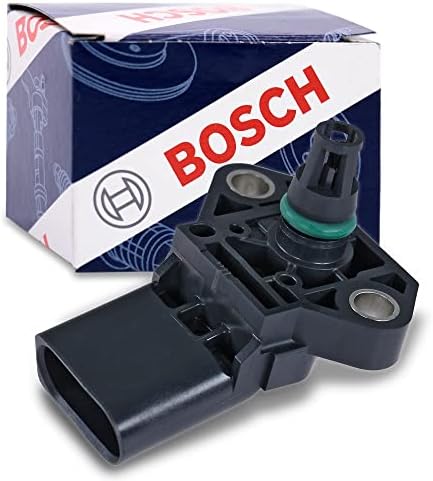
- [PREMIUM PERFORMANCE] – Bosch Manifold Absolute Pressure (MAP) Sensors provide accurate air pressure measurement to very…
- [LONGER LIFE] – Extremely sturdy sensor design employs a special coating that provides resistance to harmful chemicals i…
- [INNOVATIVE TECHNOLOGY] – Bosch continually improves its MAP sensor designs with the latest chip technology for optimum …
3. Wiring/Connector Issue
Damaged wiring or connectors can cause intermittent or incorrect signals. Corrosion at the connector, a broken wire in the loom, or a short between the signal and 5V reference will all generate wrong voltage to the ECU.
Fix: Inspect the MAP sensor connector for bent pins, corrosion, or moisture. Wiggle the wiring harness while monitoring MAP voltage – spikes or drops indicate a wiring fault. Repair any chafed wires or replace the connector. Use dielectric grease on the connector to prevent corrosion.
Recommended product: A repair wire harness pigtail for your MAP sensor (if available), or general electrical repair kit (for splicing and insulating wires).
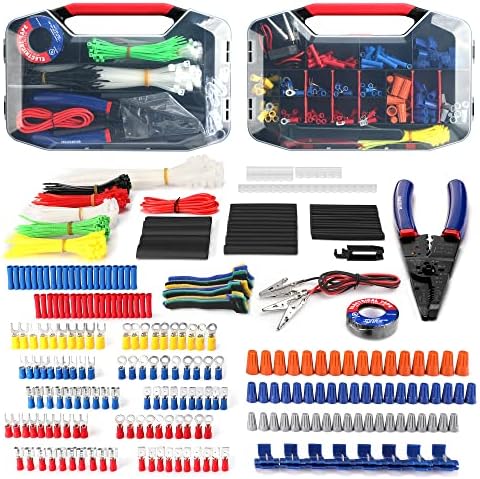
- Assorted 582 electrical wire terminals and other accessories with transparent box for easy access
- Easy and convenient to use for wire connecting usage by this complete set and wire cutter stripper included
- Wide application for electrical insulation, wire bundling, color coding, mechanical protection, wire/cable joints and re…
4. Clogged/Dirty MAP Port
Carbon, oil, or debris in the MAP sensor’s vacuum port or hose can impede the pressure signal. For example, if the small hose fitting to the sensor is partially blocked, the ECU will read incorrect pressure.
Fix: Remove the MAP sensor and blow through its port and hose. Clean with a dedicated sensor or throttle-body cleaner (do not use harsh chemicals that leave residue). Ensure the port under the sensor is free of gasket material. If contamination has entered the sensor, replacement is safer.
Recommended product: Mass Airflow/MAP sensor cleaner (such as CRC or WD-40 LOD) to clean orifices without damaging the sensor.

- QD ELECTRONICS CLEANER: A precise cleaner made from petroleum distillate and alcohol that is fast evaporating and leaves…
- FORMULA: With quick-drying, plastic safe, residue-free features, this cleaner is ideal for even the most sensitive elect…
- APPLICATIONS: QD Electronic Cleaner is ideal for use on computer components, circuit breakers, circuits, coin mechanisms…
5. Faulty BARO Sensor (if separate)
Some engines have a separate barometric (BARO) pressure sensor. If the BARO sensor fails or its vent line is blocked, the ECU gets bad ambient pressure data. This usually only matters on cars where MAP and BARO are distinct.
Fix: If your vehicle has a separate BARO (often on the intake plenum or MAF housing), test it like a MAP sensor (see service manual). A bad BARO can often set P0106/P0107/8 as well, but in some systems it may trigger P0106. Replace the BARO sensor if it’s defective.
Recommended product: Genuine BARO sensor or intake-manifold pressure sensor (often the same part number as MAP on some models).
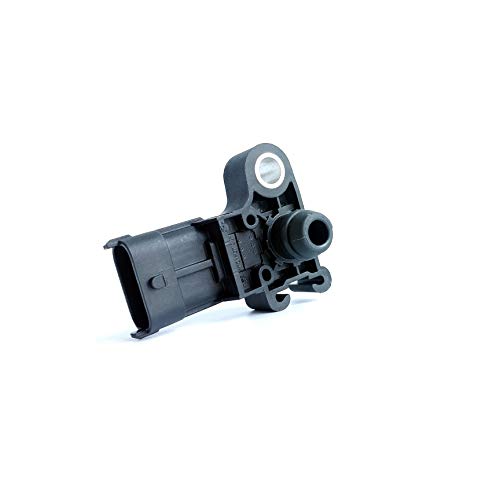
- Barometric Pressure Sensor Replacement For 2011 Chevy Cruze 1.4L LUJ
- Part Number(s): 55573248, 0261230282
- For early Gen.1 LUJ 1.4L Turbocharged Cruze only, intake manifold with 2 pressure sensors
6. Faulty ECU (Rare)
In very rare cases, the powertrain control module itself is at fault (bad analog input for MAP/BARO). This could happen if the ECU’s internal reference source or ADC channel is damaged.
Fix: Confirm all else is good before blaming the ECU. If wiring and sensors test fine, an ECU reflash or replacement may be needed. This is usually done at a dealership or professional shop.
Note: Always double-check wiring, grounds and sensors first – ECM failure is uncommon.
Common Diagnostic Mistakes
- Replacing MAP sensor prematurely: A very common error is to assume the sensor is bad without thorough testing. Often a vacuum leak or wiring issue is the real culprit. Always verify with electrical tests or a vacuum pump before swapping the MAP sensor.
- Ignoring vacuum/leaks: Failing to inspect intake leaks can waste time and money. A small cracked hose or intake gasket leak can mimic MAP failure. Always perform a smoke test or spray test around the intake while watching live MAP data.
- Overlooking signal comparison: Not using freeze-frame or live data to compare MAP vs TPS/RPM is a missed opportunity. As OBD-Codes notes, you should compare the MAP reading to throttle position at the time of failure. For example, if the TPS was 2.5 V (partial throttle), but MAP was still low (~1 V), that inconsistency points to a problem.
- Checking the wrong conditions: Remember that a MAP sensor sees atmospheric pressure at key-on. Don’t confuse the idle reading with a “leak” if the engine is off. Likewise, many turbo engines have no vacuum hose to the MAP (they mount directly). Assuming a missing hose means a problem is a common mistake.
- Skipping basic checks: Not verifying the 5 V reference and good ground can lead to pointless part swaps. If the sensor circuit has no power or ground, no sensor will work. Always confirm the reference voltage before condemning the MAP.
- Ignoring related codes: Don’t forget to look for other codes. For instance, lean codes (P0171/174) or TPS codes might clue you into a vacuum or throttle issue, respectively. Addressing those can sometimes clear P0106 if they were related.
Related Codes
- P0105: MAP/BARO Circuit Malfunction: Indicates a reference voltage or circuit problem (open/short) in the MAP sensor circuit. Often P0105 must be resolved before addressing P0106.
- P0107: “MAP/BARO Circuit Low” – The MAP voltage is too low (below expected) at engine off or idle. Indicates an open circuit or stuck-low reading.
- P0108: “MAP/BARO Circuit High” – The MAP voltage is too high (above expected) at engine off or wide throttle. Indicates a short to 5 V or stuck-high reading.
- P0171 / P0174: “System Too Lean (Bank 1/2)” – Lean fuel trim codes. A vacuum leak (a common P0106 cause) or failing MAP can cause these lean codes.
- P0300 (and P0301–P0308): “Random/Multiple Cylinder Misfire” – Erratic MAP signals or vacuum leaks can lead to misfires under load, setting P0300 series faults.
- P0110: “Intake Air Temperature Sensor” – While not directly a MAP code, it’s related in that it measures intake conditions. It’s worth checking IAT if the intake is contaminated.
Code | Definition | What It Means |
|---|---|---|
| P0105 | MAP/BARO Circuit Malfunction | General electrical fault in the MAP/BARO circuit. ECM cannot trust the sensor signal. |
| P0106 | MAP/BARO Circuit Range/Performance Problem | Sensor signal exists but doesn’t match expected engine operating conditions. |
| P0107 | MAP/BARO Circuit Low Input | MAP voltage stuck too low (typically below ~0.5V). Often caused by a short to ground, faulty sensor, or wiring issue. |
| P0108 | MAP/BARO Circuit High Input | MAP voltage stuck too high (typically above ~4.5V). Often caused by a short to 5V, failed sensor, or disconnected vacuum source. |
| P0109 | MAP/BARO Circuit Intermittent | Signal drops in and out unexpectedly due to loose connections, damaged wiring, or intermittent sensor failure. |
What is the P0106 code?
P0106 indicates that the Engine Control Module (ECM) has detected a MAP or BARO sensor signal that is outside the expected performance range or does not correlate correctly with engine operating conditions such as throttle position, engine speed, and load.
What causes a P0106 code?
Common causes of P0106 include a faulty MAP sensor, vacuum leaks, clogged MAP sensor ports, damaged wiring, poor electrical connections, intake manifold leaks, BARO sensor faults, and, in rare cases, a malfunctioning ECM.
What is the difference between P0105 and P0106?
P0105 indicates a general MAP/BARO circuit malfunction, while P0106 indicates that the MAP sensor signal is present but falls outside the expected operating range or does not perform as expected under changing engine conditions.
Can a vacuum leak cause P0106?
Yes. Vacuum leaks can alter intake manifold pressure and cause MAP sensor readings that do not match actual engine load. When the ECM detects this mismatch, it may store code P0106.
Can a dirty MAP sensor cause P0106?
Yes. Carbon deposits, oil contamination, or debris inside the MAP sensor port can affect pressure readings and cause the sensor signal to fall outside the expected performance range.
Can I drive with a P0106 code?
The vehicle may remain drivable, but engine performance, fuel economy, and emissions can be negatively affected. The issue should be diagnosed and repaired as soon as possible to prevent further drivability problems.

4 Comments