
C0032: Left Front Wheel Speed Sensor Circuit Malfunction
When you purchase through links on our site, we may earn an affiliate commission. See our affiliate disclaimer for more information.
What does the C0032 Left Front Wheel Speed Sensor Circuit Malfunction mean?
The C0032 code is usually related to a front wheel speed sensor circuit, but the exact meaning can vary by vehicle manufacturer.
In the SAE-style definition, C0032 may be described as: Left Front Wheel Speed Sensor Supply Subfault
This means the ABS or stability control module has detected a problem with the wheel speed sensor supply, signal, or circuit for the right front wheel.
However, this code needs one important warning: On some vehicles, especially some GM platforms, C0032 may refer to the right front wheel speed sensor, while another code such as C0035 may refer to the left front wheel speed sensor.
C0032 is still a chassis-system code, so you should not rely only on the five-character code. Some manufacturers may use different scan-tool descriptions, different failure-type bytes, or different ABS module wording.
When the C0032 Triggers?
The ABS module continuously monitors wheel speed signals from all four wheels while the vehicle is moving.
Each wheel has a wheel speed sensor that tells the ABS module how fast that wheel is rotating. The ABS module uses this information for ABS braking, traction control, stability control, electronic brake-force distribution, and other safety-related functions.
When the ABS module detects that one wheel speed sensor signal is missing, abnormal, intermittent, or does not match the other wheels, it may store a wheel speed sensor trouble code such as C0032.
For example, if the left front wheel speed signal drops out while the other three wheels are still showing vehicle speed, the ABS module knows that the left front signal is not reliable. Depending on the vehicle and code definition, it may trigger C0032 or another manufacturer-specific wheel speed sensor code.
C0032 may trigger when the ABS module detects:
- No signal from the affected wheel speed sensor
- Sensor supply voltage missing
- Open circuit in the sensor wiring
- Short to ground or short to voltage
- Intermittent signal dropout
- Abnormal wheel speed compared with the other wheels
- Weak magnetic encoder signal
- Damaged tone ring or encoder ring
- Excessive wheel bearing play
- Incorrect wheel bearing or hub installation
Once the ABS module can no longer trust that wheel speed signal, it may turn on the ABS light, traction control light, or stability control warning and disable some safety functions.
How the Wheel Speed Sensor System Works?
The ABS module uses wheel speed sensors to monitor how fast each wheel is rotating.
The module compares wheel speed data from all four wheels to control:
- ABS braking
- traction control
- stability control
- electronic brake-force distribution
- hill start assist
- cruise control logic
- some ADAS functions
- some steering assist strategies
- vehicle speed information shared with other modules
If one wheel speed signal is missing or incorrect, the ABS module may disable some safety functions.
Active vs Passive Wheel Speed Sensors
There are two common types of wheel speed sensors:
- Passive inductive wheel speed sensors
- Active wheel speed sensors
The test method is different for each type. Using the wrong test can give a wrong diagnosis, and in some cases may damage the sensor.
Passive Wheel Speed Sensor
A passive wheel speed sensor is like a small generator.
It has a magnetic coil and reads a toothed tone ring. As the wheel rotates, the sensor generates an AC voltage signal.
A passive sensor usually:
- Does not need external power supply
- Generates AC voltage as the wheel turns
- May be tested for resistance
- May be tested for AC voltage output
- Produces higher voltage as wheel speed increases
Typical passive sensor checks may include:
- Resistance across sensor terminals
- Resistance to ground
- AC voltage while spinning the wheel
- Tone ring inspection
- Air gap check
- Bearing play check
However, the exact resistance value depends on the vehicle.
Active Wheel Speed Sensor
An active wheel speed sensor works differently.
It receives power or bias voltage from the ABS module and sends back a digital or current-modulated signal.
Active sensors are common on modern vehicles and often read a magnetic encoder ring built into the wheel bearing or hub.
An active sensor usually:
- Needs module supply voltage
- Can detect very low wheel speeds
- Sends a square-wave or current-modulated signal
- May switch current between about 7 mA and 14 mA on some systems
- Should not be tested with a resistance meter unless service information says it is safe
This is important: Do not automatically ohm-test an active wheel speed sensor. Some active sensor electronics can be damaged by improper resistance testing.
For active sensors, use voltage, current, live data, or scope testing.
How to Diagnose C0032 Step-by-Step
C0032 should be diagnosed in a logical order. Do not start by replacing the sensor.
Step 1: Confirm the Exact Code Description
Use a scan tool that can read the ABS module.
Confirm:
- Exact code text
- Affected wheel corner
- Subfault or failure type
- Whether the code is current or history
- Whether related ABS or chassis codes are present
This is very important because C0032 does not identify the same wheel corner on every manufacturer.
Step 2: Check Battery Voltage
Before chasing sensor faults, check system voltage. Low voltage can affect the ABS module and active sensor supply.
Check:
- Battery voltage
- Charging voltage
- Battery terminals
- ABS module power supply
- ABS module grounds
- Related low-voltage codes
Fix low-voltage problems first.
Step 3: Compare All Four Wheel Speed Signals
Use live data and compare all four wheel speed sensors. Do this during:
- Slow roll
- Low-speed turn
- Road test
- Wheel rotation on a lift, if safe and appropriate
The affected wheel may:
- Stay at 0 mph
- Drop out at low speed
- Jump suddenly
- Read slower than the other wheels
- Stop reading during bumps or turns
This step helps confirm the actual faulty corner before touching the wiring.
Step 4: Identify Sensor Type
Before testing, identify whether the sensor is active or passive.
Check:
- Wiring diagram
- Connector type
- OEM service information
- Wheel bearing design
- Sensor test procedure
This matters because passive and active sensors are tested differently. Do not ohm-test an active sensor unless the service manual specifically allows it.
Step 5: Visually Inspect the Sensor, Wiring, and Connector
Inspect the affected wheel area. Look for:
- Broken sensor wire
- Rubbing near tire or suspension
- Damaged clips
- Loose connector
- Water intrusion
- Corrosion
- Bent pins
- Backed-out terminals
- Sensor not fully seated
- Damaged pigtail
- Harness stretched during brake or suspension work
Many ABS sensor faults are caused by damaged wiring near the wheel because the harness moves with steering and suspension travel.
Step 6: Check the Tone Ring or Magnetic Encoder
Inspect the sensor target. Depending on the design, the sensor may read:
- Toothed tone ring
- Reluctor ring
- Magnetic encoder ring inside the hub/bearing
Look for:
- Cracked tone ring
- Missing teeth
- Rust buildup
- Metallic debris
- Damaged encoder ring
- Bearing play
- Wrong bearing orientation
- Sensor air gap problem
If the code appeared after hub or bearing replacement, confirm the encoder side is facing the sensor.
A reversed or incorrectly installed bearing can cause no wheel speed signal even when the sensor is good.
Step 7: Test Active Wheel Speed Sensor Supply
For active wheel speed sensors, check for supply or bias voltage from the ABS module. With the key on, test the vehicle-side connector.
If supply is missing, suspect:
- Open wire
- Connector fault
- Shorted circuit
- ABS module driver issue
- Damaged harness
Do not replace the sensor until you confirm it is receiving the correct supply.
Step 8: Test Active Sensor Signal or Current
An active wheel speed sensor often switches current or produces a digital signal as the wheel rotates. On some systems, the signal may toggle around 7 mA to 14 mA.
You may need:
- Scan tool live data
- DMM with mA function
- Oscilloscope
- Backprobe leads
- OEM test procedure
If supply is present but the signal does not toggle while the wheel rotates, inspect the encoder ring and sensor.
Step 9: Test Passive Sensor Resistance and AC Output
For passive sensors, check resistance only if the sensor is passive and service information allows it. Typical passive sensor resistance varies by design. Some examples may be around 900 ohms to 2500 ohms, depending on the system.
Also check:
- Resistance to ground
- AC voltage output while rotating the wheel
- Signal dropout
- Tone ring condition
- Air gap
If resistance is open, shorted, or the AC signal is weak, the sensor, tone ring, bearing, or wiring may be faulty.
Testing before replacement can save money.
A C0032 code does not always mean the ABS sensor is bad. The fault may be in the wiring, connector, tone ring, magnetic encoder, or wheel bearing. I explain the step-by-step ABS wheel speed sensor testing process in Chapter 18 of my book: Engine Sensors & OBD-II Codes Explained, so you can confirm the fault before replacing parts.
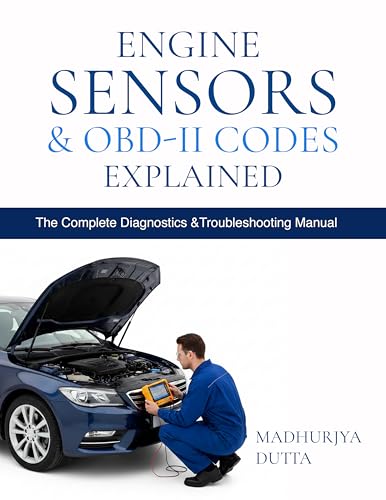
STOP GUESSING. START DIAGNOSING. SAVE HUNDREDS ON REPAIRS.
Tired of expensive repair bills and mechanics who “parts-cannon” your car without finding the real issue? The “Check Engine” light shouldn’t be a mystery. This guide puts professional-level diagnostics in your hands.
Step 10: Wiggle Test the Harness
If the fault is intermittent, perform a wiggle test while watching live wheel speed data or scope signal. Move:
- Sensor harness
- Connector
- Pigtail
- Suspension-area wiring
- Harness near clips
- Harness near wheel well
If the signal drops out when the wire moves, repair the harness or connector.
Step 11: Repair the Root Cause
Depending on the test result, the repair may be:
- Clean the encoder ring
- Repair damaged wiring
- Replace corroded connector
- Replace wheel speed sensor
- Replace damaged tone ring
- Replace hub or wheel bearing
- Correct bearing orientation
- Repair ABS module power/ground
- Repair ABS module output circuit
- Replace ABS module only after all external causes are proven
Step 12: Clear Codes and Verify
After repair:
- Clear ABS codes.
- Start the vehicle.
- Confirm ABS light turns off if applicable.
- Road test the vehicle.
- Monitor all four wheel speed signals.
- Check low-speed braking behavior.
- Rescan the ABS module.
- Confirm C0032 does not return.
A proper verification should include live wheel speed comparison, not just clearing the code.
C0032 Diagnostic Table
| Step | What to Check | Tool Needed | Normal Result | If Abnormal |
| 1 | Exact ABS code text and subfault | ABS-capable scan tool | Correct corner and failure type confirmed | Do not test wrong wheel |
| 2 | Battery and charging voltage | DMM / battery tester | Stable voltage | Repair power or charging problem |
| 3 | All four wheel speed PIDs | Scan tool | Smooth matching wheel speeds | Identify dropout or wrong corner |
| 4 | Sensor type | Service info | Active or passive confirmed | Do not use wrong test method |
| 5 | Sensor wiring and connector | Visual / DMM | No damage, corrosion, or loose pins | Repair harness or connector |
| 6 | Tone ring or encoder | Visual / borescope | Clean and undamaged target | Clean or replace hub/tone ring |
| 7 | Active sensor supply | DMM / scope | Correct module supply present | Diagnose open/short/module output |
| 8 | Active sensor signal/current | Scope / mA meter / scan tool | Current or signal toggles while wheel rotates | Inspect sensor and encoder |
| 9 | Passive sensor resistance | DMM | Within OEM spec | Replace sensor or repair circuit |
| 10 | Passive AC output | DMM / scope | AC signal increases with wheel speed | Inspect sensor, air gap, tone ring |
| 11 | Harness wiggle test | Scan tool / scope | No signal dropout | Repair intermittent wiring fault |
| 12 | Verification road test | Scan tool | Code does not return | Continue diagnosis |
How to Prevent C0032 and Other ABS Sensor Codes?
You cannot prevent every wheel speed sensor fault, but you can reduce the risk. Follow these tips:
- Keep wheel speed sensor connectors clean and sealed
- Repair damaged fender liner or splash shields
- Inspect ABS wiring during brake service
- Avoid pulling or stretching sensor wiring
- Check harness clips after suspension work
- Clean debris from the hub area carefully
- Install wheel bearings in the correct orientation
- Avoid using magnetic tools on magnetic encoder rings
- Repair wheel bearing noise or play early
- Use correct parts for hub and bearing replacement
After diagnosing or repairing C0032, keep a record of the code, mileage, symptoms, affected wheel, repair performed, and whether the ABS light returned.
You can track warning codes, service intervals, repairs, and maintenance history in Carvio, my car maintenance app available on iOS and Android.
Related Codes
Related codes may include:
- C0030 – Left Front Tone Wheel Subfault
- C0031 – Left Front Wheel Speed Sensor Subfault
- C0032 – Left Front Wheel Speed Sensor Supply Subfault
- C0033 – Right Front Tone Wheel Subfault
- C0034 – Right Front Wheel Speed Sensor Subfault
- C0035 – Right Front Wheel Speed Sensor Supply Subfault
- C0036 – Left Rear Tone Wheel Subfault
- C0037 – Left Rear Wheel Speed Sensor Subfault
- C0038 – Left Rear Wheel Speed Sensor Supply Subfault
- C0039 – Right Rear Tone Wheel Subfault
- C003A – Right Rear Wheel Speed Sensor Subfault
- C003B – Right Rear Wheel Speed Sensor Supply Subfault
- C0040 – Right Front Wheel Speed Sensor Circuit on many vehicles, but may have a different brake/ABS-related meaning on some platforms
- U0415 – Invalid Data Received From ABS Control Module
If another wheel speed sensor code is present, diagnose the code with the most specific corner and failure type first.
Is C0032 always right front?
No. In some code families, C0032 may refer to the right front wheel speed sensor supply, but some manufacturers use C0032 differently. On some GM vehicles, C0032 may refer to the front front wheel speed sensor. Always confirm the ABS module’s exact code description.
Does C0032 always mean the wheel speed sensor is bad?
No. C0032 can be caused by a bad sensor, damaged wiring, corroded connector, dirty magnetic encoder, damaged tone ring, bad wheel bearing, wrong bearing installation, or ABS module supply problem.
What does “subfault” mean?
Subfault means the base code has a more specific failure type. It may indicate open circuit, short circuit, signal compare failure, magnetic field too low, supply fault, or another more detailed fault condition.
Can I drive with C0032?
You may be able to drive cautiously if the brake pedal feels normal, but ABS, traction control, and stability control may be disabled. If false ABS activation or longer stopping distance occurs, diagnose the vehicle immediately.
Will C0032 turn on the ABS light?
Yes. A wheel speed sensor fault commonly turns on the ABS warning light and may also turn on traction control or stability control warnings.
Can a bad wheel bearing cause C0032?
Yes. A loose or damaged wheel bearing can change the sensor air gap or damage the magnetic encoder ring, causing wheel speed signal dropout.
Can metallic debris cause C0032?
Yes. Metallic debris can stick to a magnetic encoder ring and distort the wheel speed sensor signal, especially at low speed.
Should I ohm-test the wheel speed sensor?
Only if it is a passive sensor and the service manual says to do so. Do not ohm-test an active wheel speed sensor unless the OEM procedure allows it.
How do I know if the ABS sensor is active or passive?
Check the wiring diagram and service information. Active sensors need module supply voltage and produce a digital or current-modulated signal. Passive sensors generate AC voltage as the wheel turns.
What is a normal active wheel speed sensor signal?
On some systems, an active sensor may switch current between about 7 mA and 14 mA while the wheel rotates. The exact value depends on the vehicle.
What is a normal passive wheel speed sensor resistance?
It varies by design. Some passive sensors may measure around 900 ohms to 2500 ohms, but always use the vehicle-specific specification.
Can a connector cause C0032?
Yes. Water intrusion, corrosion, loose terminals, or damaged connector seals can cause intermittent or permanent wheel speed sensor faults.
What if C0032 appeared after wheel bearing replacement?
Suspect wrong bearing orientation, wrong hub, damaged encoder ring, damaged sensor, or damaged wiring before replacing the ABS module.
Why do traction control and stability lights come on with C0032?
ABS, traction control, and stability control all depend on wheel speed data. If one wheel speed signal is missing or unreliable, multiple systems may turn on warnings.

3 Comments