
How to Fix P0000?
When you purchase through links on our site, we may earn an affiliate commission. See our affiliate disclaimer for more information.
What Does the P0000 Code Mean?
P0000 – No Fault Detected
The P0000 code is a generic OBD-II code that simply means no diagnostic trouble codes are present in the engine or powertrain control module. In other words, the vehicle’s ECU/ECM has not detected any faults at the time of the scan.
How to Prevent OBD Trouble Codes and Avoid the Check Engine Light
Regular vehicle maintenance is the best way to prevent OBD trouble codes and keep the check engine light from appearing. Follow your vehicle’s recommended service schedule, change engine oil and filters on time, use the correct fuel and fluids, and fix small problems before they turn into expensive repairs.
Never miss your vehicle service again. Download Carvio and easily track fuel usage, maintenance history, and service reminders to help keep your vehicle running smoothly.

Why P0000 May Appear on a Scan Tool
P0000 is not a failure code and does not indicate a problem with the vehicle. It usually appears for one of the following reasons:
- The scan tool is confirming that no active or stored DTCs exist
- The vehicle has recently had codes cleared, and no new faults have returned
- A basic or generic scan tool displays P0000 as a placeholder when no codes are found
- The scan was performed on a module or system that currently reports normal operation
Read our free complete guide on Kindle and learn how to diagnose sensor-related issues with clarity and confidence.
STOP GUESSING. START DIAGNOSING. SAVE HUNDREDS ON REPAIRS.
Tired of expensive repair bills and mechanics who “parts-cannon” your car without finding the real issue? The “Check Engine” light shouldn’t be a mystery. This guide puts professional-level diagnostics in your hands.
Is P0000 a Problem?
No. P0000 does not require any repair or diagnosis. It is not associated with symptoms, warning lights, or performance issues. If the vehicle is running normally and no other codes are present, no further action is needed.
However, if a warning light is on but only P0000 appears, the issue may be:
- Stored in another module (ABS, BCM, SRS, TCM)
- Pending or history-related
- Not readable by the scan tool being used
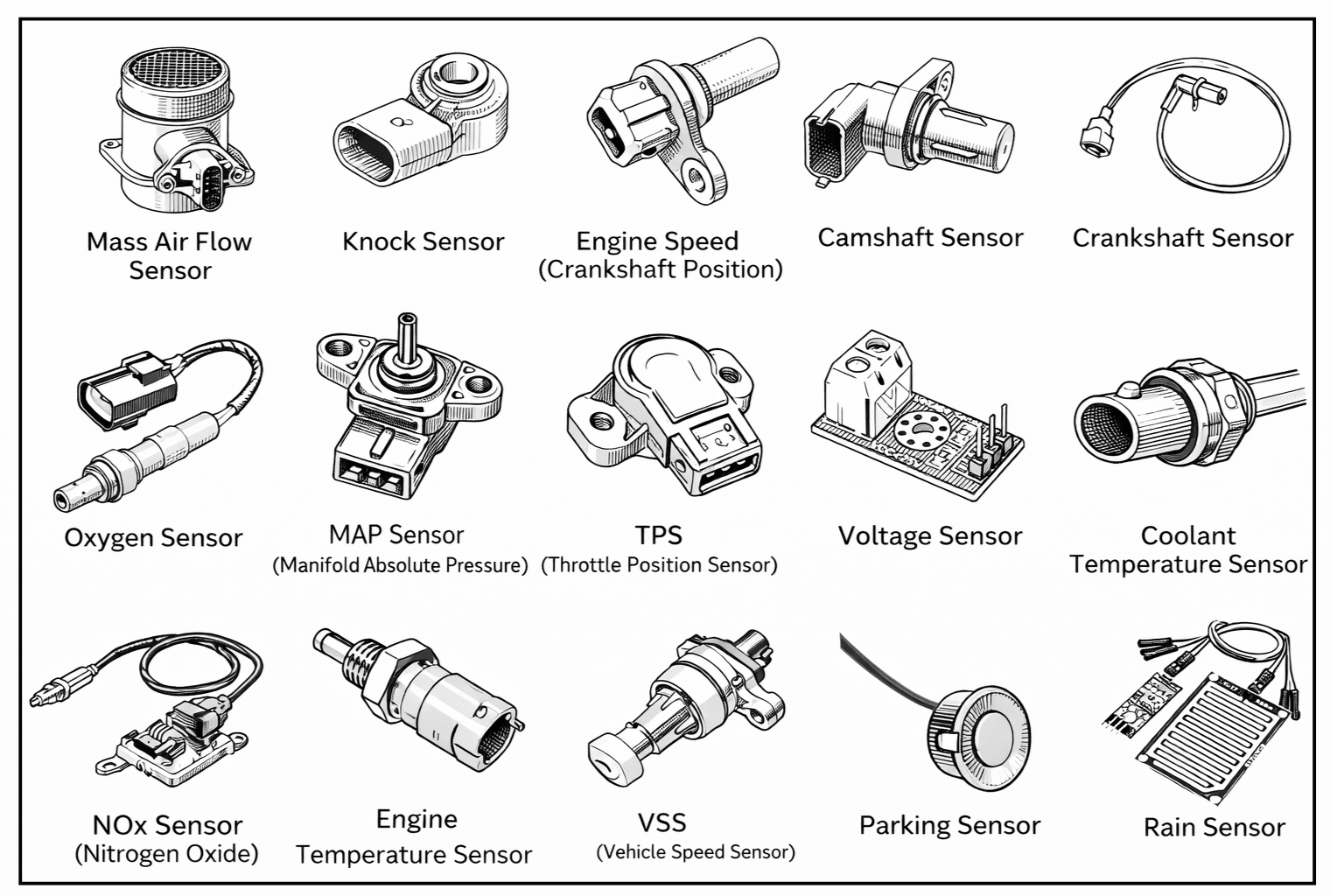
You’re probably already familiar with how modern car sensor systems work in your vehicle. When the MIL or CEL (Malfunction Indicator Lamp or Check Engine Light) illuminates, it means the ECU (Engine Control Unit) has detected a fault somewhere in the system.
Because of this, understanding how car sensors function and how to diagnose sensor-related faults is essential. Proper knowledge allows you to interpret warning lights correctly, identify the root cause of a problem, and avoid unnecessary repairs while ensuring the vehicle continues to operate safely and efficiently.
Read more about:
Car Sensors Explained: What They Do and How to Diagnose Them
With the increasing use of electronic systems in modern vehicles,…
What to Do If You See P0000
If the vehicle has no warning lights and drives normally, you can safely ignore the P0000 code. If there are symptoms or warning lights, use a more advanced scan tool to check all control modules, including ABS, transmission, and body systems.
