
P0100: Mass or Volume Air Flow “A” Circuit Malfunction
When you purchase through links on our site, we may earn an affiliate commission. See our affiliate disclaimer for more information.
What does the P0100 Mass or Volume Air Flow “A” Circuit Malfunction mean?
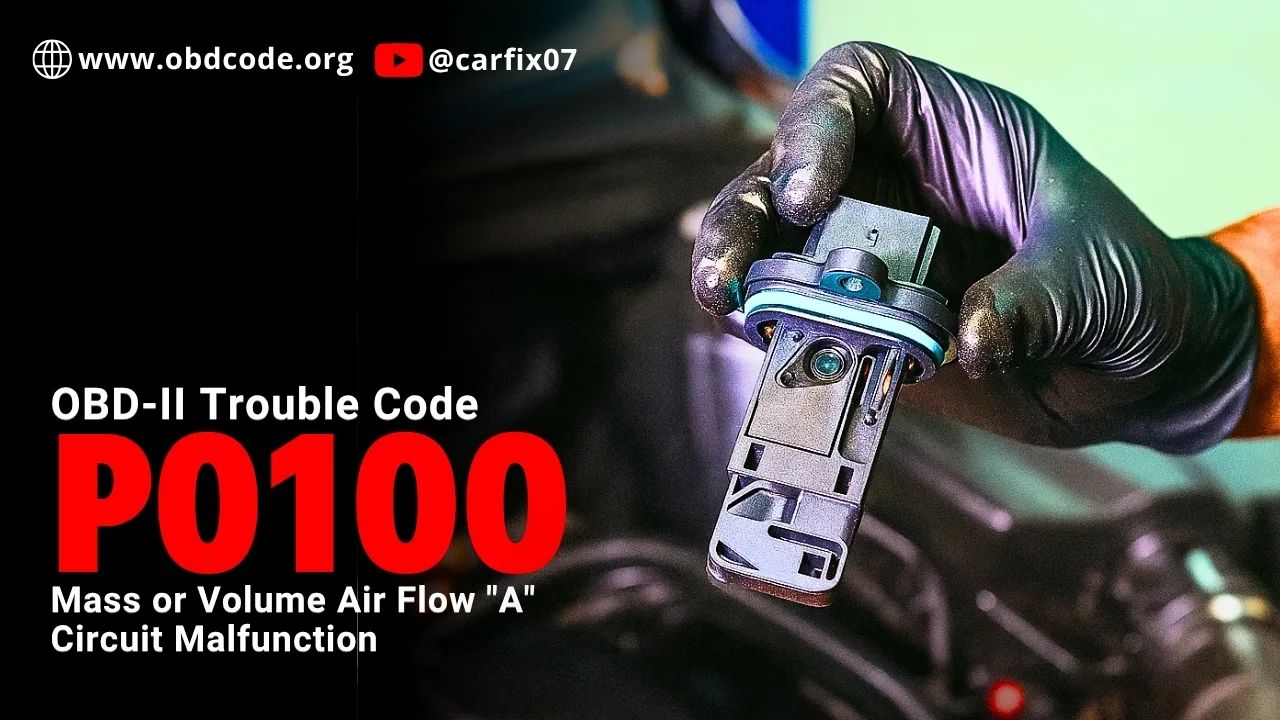
The P0100 code is a generic powertrain diagnostic trouble code (DTC) that indicates a malfunction in the Mass or Volume Air Flow (MAF) “A” Circuit.
The MAF sensor is responsible for measuring the amount and density of air entering the engine. This data is crucial for the Engine Control Module (ECM) to calculate the correct air-fuel ratio for efficient combustion.
Typically, the MAF sensor is mounted in the engine’s air intake tract, downstream from the air filter. It continuously monitors airflow and sends this information to the ECM, helping the engine adjust fuel injection and ignition timing accordingly.
When the P0100 code is triggered, it means the ECM has detected an open circuit or electrical fault within the MAF sensor circuit. In simple terms, the sensor or its circuit is not receiving the necessary reference voltage or returning an expected signal, which disrupts accurate airflow measurement and overall engine performance.
Read our free complete guide on Kindle and learn how to diagnose sensor-related issues with clarity and confidence.
STOP GUESSING. START DIAGNOSING. SAVE HUNDREDS ON REPAIRS.
Tired of expensive repair bills and mechanics who “parts-cannon” your car without finding the real issue? The “Check Engine” light shouldn’t be a mystery. This guide puts professional-level diagnostics in your hands.
When the P0100 Triggers?
For the fuel injection system to operate correctly, the Engine Control Module (ECM) or Powertrain Control Module (PCM) must know the exact mass of air entering the engine. This information allows it to calculate the proper amount of fuel needed for efficient combustion.
Most Mass Air Flow (MAF) sensors use a “hot wire” measuring principle. Inside the sensor, a thin platinum wire is electrically heated to a specific temperature—usually several hundred degrees Celsius above ambient air. Many designs include a second “cold wire” that measures the surrounding air temperature for reference.
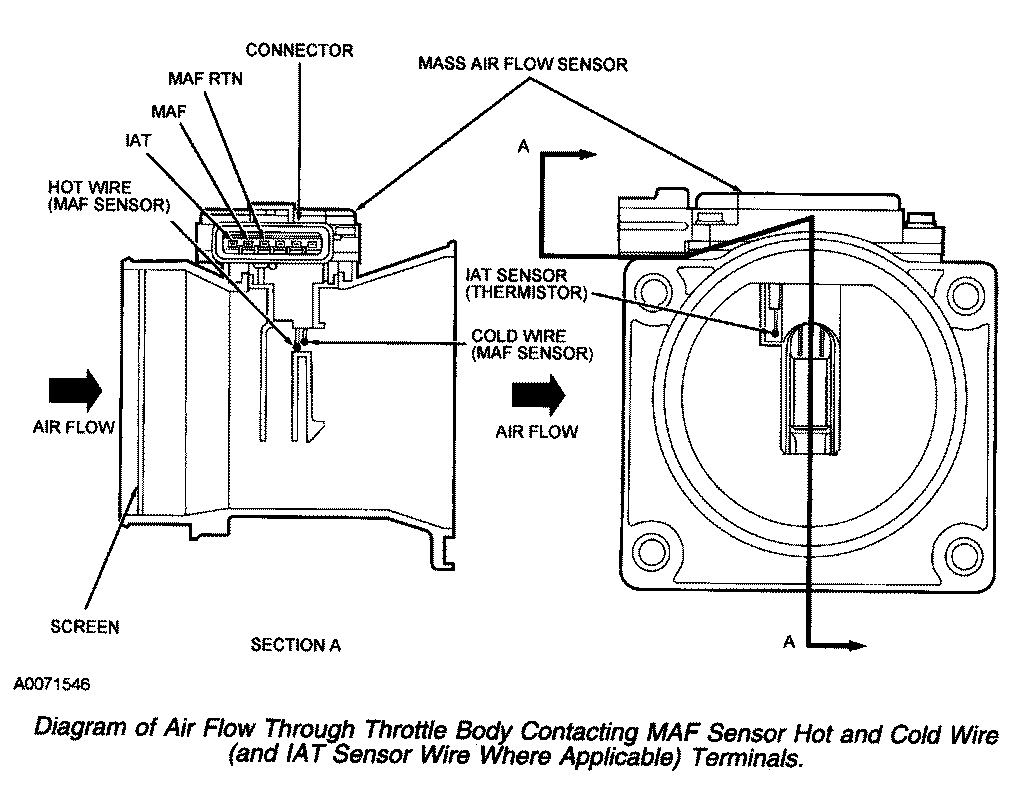
As air passes through the sensor, it cools the hot wire. To maintain the correct temperature difference between the hot and cold wires, the sensor increases the electrical current to the hot wire. The amount of additional current required is directly proportional to the airflow rate, and this information is sent to the ECM/PCM.
Depending on the vehicle, MAF sensors transmit either a voltage signal or a frequency signal to indicate airflow.
Some Asian vehicles use a sonic-type MAF sensor, which works differently. This design features a tiny speaker that emits a high-frequency sound wave toward a receiver across the airflow passage. The deflection or delay of the sound wave—caused by the airflow—provides precise input to the ECM/PCM about the air entering the engine.
When the ECM detects that the MAF sensor signal is missing, out of range, or inconsistent, it triggers the P0100 trouble code.
Read more about:
Car Sensors Explained: What They Do and How to Diagnose Them
With the increasing use of electronic systems in modern vehicles,…
How to Prevent OBD Trouble Codes and Avoid the Check Engine Light
Regular vehicle maintenance is the best way to prevent OBD trouble codes and keep the check engine light from appearing. Follow your vehicle’s recommended service schedule, change engine oil and filters on time, use the correct fuel and fluids, and fix small problems before they turn into expensive repairs.
Never miss your vehicle service again. Download Carvio and easily track fuel usage, maintenance history, and service reminders to help keep your vehicle running smoothly.


How To Fix P0100?
Troubleshooting P0100 involves several steps, and we’ll discuss each one in detail. Let’s get started!
Before diving into specific repairs, perform an OBD-II scanner reset to clear the codes. Sometimes, these codes pop up due to recent maintenance work and can resolve themselves after a reset.
Read our free complete guide on Kindle and learn how to diagnose sensor-related issues with clarity and confidence.
STOP GUESSING. START DIAGNOSING. SAVE HUNDREDS ON REPAIRS.
Tired of expensive repair bills and mechanics who “parts-cannon” your car without finding the real issue? The “Check Engine” light shouldn’t be a mystery. This guide puts professional-level diagnostics in your hands.
To reset the error codes, use an OBD-II scanner. Simply connect the scanner to your vehicle, follow the instructions to clear the trouble codes, and see if the P0100 code reappears.
If the code comes back, it means there’s a persistent issue that needs further troubleshooting.
Possible Root Causes of P0100
Some common root causes of the P0100 error code include:
1. Dirt Build-Up on the MAF Sensor Wire or Filament
This is one of the most common reasons for the P0100 code. Over time, dust, oil, and debris from the intake air can accumulate on the MAF sensor’s hot wire or sensing element, preventing it from accurately measuring the incoming air. When this happens, the sensor provides incorrect airflow readings to the ECM, triggering the code.
Fix: Use a dedicated MAF sensor cleaner (never use carburetor or brake cleaner) to gently clean the sensor element. Allow it to dry completely before reinstalling. In most cases, cleaning the MAF sensor will resolve the issue and clear the P0100 code.
2. Open or Shorted Wiring in the MAF Circuit
Wiring issues such as open circuits, shorted wires, or corroded connectors can disrupt the electrical communication between the MAF sensor and the Powertrain Control Module (PCM). When this connection is compromised, the sensor cannot transmit accurate airflow data, causing the PCM to misinterpret engine conditions and trigger the P0100 code.
Fix: Inspect the wiring harness and electrical connectors for any visible signs of wear, fraying, or corrosion. Use a Digital Multimeter (DMM) to verify continuity, reference voltage, and ground integrity in the circuit. Repair or replace any damaged wires or connectors as necessary to restore proper signal flow.
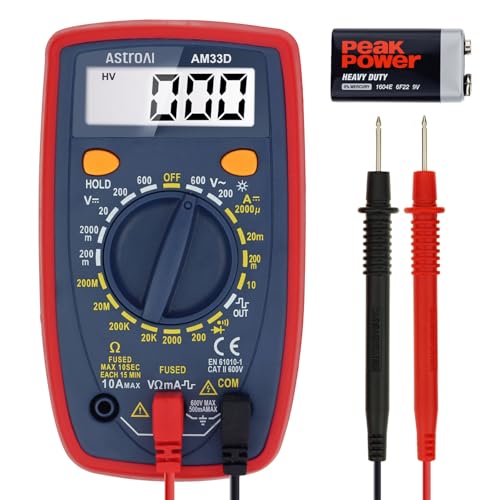
- Additional Tips – The following incorrect operations may cause the multimeter not to show results: Firstly, the plugs of…
- Versatile Digital Multimeter – Accurately measures AC/DC Voltage, DC Current, Resistance, and Diode. This Multimeter is …
- Troubleshooting with Accuracy – This Multimeter has a sampling speed of 2 times per second; Built-in a backlight LCD dis…
3. Faulty MAF Sensor
Over time, the Mass Air Flow (MAF) sensor itself can fail due to internal electronic faults, wear, or contamination. A failing MAF sensor may produce erratic or inaccurate readings, causing the ECM/PCM to receive incorrect airflow data. This disrupts the air-fuel mixture, leading to poor engine performance and the activation of the P0100 code.
Fix: If cleaning the MAF sensor does not resolve the issue, test the sensor using a digital multimeter or an OBD-II scan tool to verify proper signal voltage or frequency output. If the readings are outside of the manufacturer’s specifications, replace the MAF sensor with a high-quality OEM or equivalent unit.
![A-Premium Mass Air Flow Sensor MAF [5 Pins] Compatible with Nissa...](https://m.media-amazon.com/images/I/41vhX1pye6L._AC_.jpg)
- [Vehicle Fitment-1]: Compatible with Nissan Altima 04-14 3.5L (To 05/2014),Altima 04-12 2.5L, Frontier 05-19 2.5L/4.0L, …
- [Vehicle Fitment-2]: Compatible with Infiniti G35 03-08 3.5L, G37 08-13 3.7L, QX56 04-13 5.6L, Q50/Q60 14-15 3.7L, EX35 …
- [Reference Number]: 226807S00A, 1380050Z00, 1380050Z01, 226807S000, 226807S00A, 22680AW400, 226807S00B, 22680-7S000, 226…
